


What Is a Traditional Afternoon Tea? A Complete Guide
Table of Contents
What Is a Traditional Afternoon Tea? The Essential Answer
The Traditional Afternoon Tea Menu: Three Tiers Explained
Savory Finger Sandwiches and Small Bites
Scones with Clotted Cream and Preserves
Cakes, Pastries, and Sweet Treats
The Difference Between High Tea and Afternoon Tea
Afternoon Tea Etiquette: A Practical Guide for Guests
Tea Selection and Brewing: What Gets Poured
The Traditional Default: A Black Blend
Lighter and Caffeine-Free Options
Brewing: Temperature and Time
Pairing Tea with the Tiers
Dietary Adaptations and Allergen-Aware Menus
How to Host Afternoon Tea at Home
Conclusion: Experiencing Traditional Afternoon Tea
Frequently Asked Questions
Last Updated: October 9, 2026
What Is a Traditional Afternoon Tea? The Essential Answer
A traditional afternoon tea is a light, mid-afternoon meal of finger sandwiches, scones with clotted cream and preserves, and small sweet treats, served alongside a pot of freshly brewed tea.
The distinction that trips people up is that afternoon tea is a light meal, not a heavy one. Portions are deliberately small.
That single fix, a small meal at four o'clock, turned into a social institution.
Below, we break down the three tiers, the etiquette, the tea itself, and how to host your own version at home.
The Traditional Afternoon Tea Menu: Three Tiers Explained
The traditional afternoon tea menu follows a set formula across three tiers, eaten from the bottom up: savories first, then scones, then sweets. Each tier has a job, and the order matters more than most guests realize.

Savory Finger Sandwiches and Small Bites
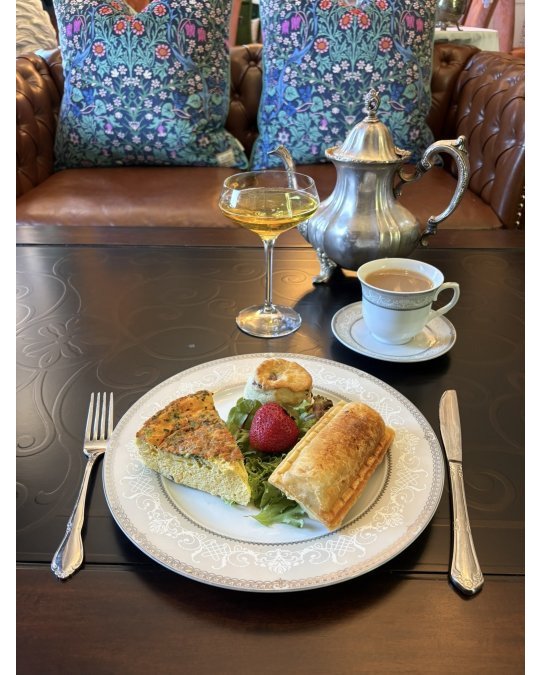
The bottom tier holds the savories, and it sets the tone for everything after. Classic fillings include cucumber with cream cheese, smoked salmon, egg salad, and thinly sliced ham. The bread is trimmed of crusts and cut into fingers or small triangles, roughly two bites each.
A workable rule of thumb for planning is three to four sandwich pieces per guest, drawn from three or four different fillings so the tier reads as varied rather than repetitive.
Scones with Clotted Cream and Preserves
The middle tier is the heart of the meal. A proper scone is small, slightly crumbly, and served with clotted cream and fruit preserves, most often strawberry. Lemon curd appears frequently as a third option.
Plan on one to two scones per guest. Scones are at their best within a few hours of baking, so if you are hosting at four o'clock, bake in the late morning and rewarm briefly rather than baking the day before.
Cakes, Pastries, and Sweet Treats
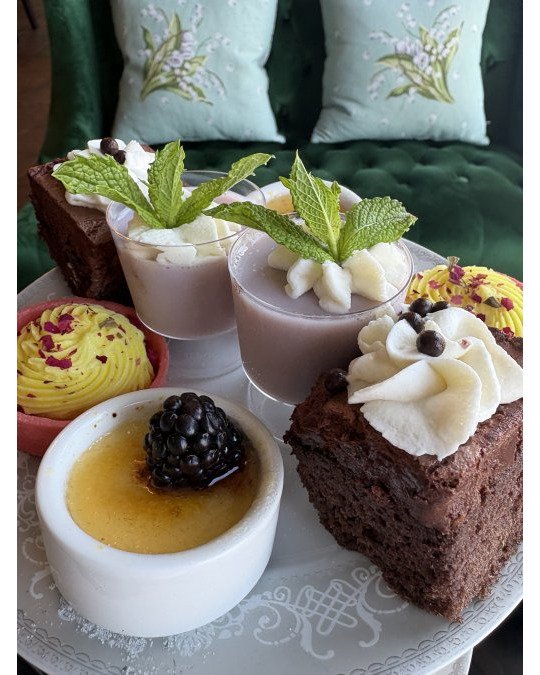
The top tier carries the sweets: petits fours, small cakes, tartlets, and teacakes. These are the smallest items on the stand, usually one or two bites each. They exist to close the meal on a sweet note, not to fill you up.
Two to three sweet items per guest is plenty. Choose for contrast in texture and flavor: something with fruit, something with chocolate, and something with a crisp or flaky element.
Tier | Contents | Order | Bite Size | Per Guest |
Bottom | Finger sandwiches, small bites | First | 1-2 bites | 3-4 pieces |
Middle | Scones, clotted cream, preserves | Second | 2-3 bites | 1-2 scones |
Top | Cakes, pastries, petits fours | Third | 1-2 bites | 2-3 pieces |
Pro Tip Eat from the bottom tier up, and take one item at a time onto your own plate. Loading your plate with all three tiers at once is the fastest way to look like a first-timer.
Key Takeaway Build the menu backward from your serving time: sweets first (they keep), scones second (bake the morning of), sandwiches last (they are the most perishable). That sequence alone prevents most of the last-minute scramble that makes home hosting feel harder than it is.
The Difference Between High Tea and Afternoon Tea
The difference between high tea and afternoon tea comes down to class, timing, and substance. Afternoon tea is a light, elegant meal served mid-afternoon, traditionally at a low table.
Cup of Culture
The names describe furniture, not formality. "Low tea" refers to the low table it was served on; "high tea" refers to the high dinner table. Many people assume high tea is the fancier version.
Cream tea is a third, simpler variant: just scones, clotted cream, jam, and tea. No sandwiches, no sweets.
Afternoon Tea Etiquette: A Practical Guide for Guests
Afternoon tea etiquette is simpler than most guides suggest, and it comes down to a handful of habits. Stir your tea gently without clinking the spoon against the cup, and never leave the spoon standing in it. Hold the cup by the handle with your index finger through the loop, not with a finger hooked underneath.
A few more that matter:
Break off a piece of scone rather than biting into the whole thing
Eat sandwiches with your fingers, not a fork
Place your napkin on your lap, folded, not spread open
Wait for the host to begin before you start
What most guides miss is that the point of etiquette here is consideration, not performance. Nobody is scoring you.
Tea Selection and Brewing: What Gets Poured
Most guides to afternoon tea spend their words on food and etiquette and treat the tea itself as an afterthought. That is backwards. The tea is the through-line of the meal, and the choices you make about leaf, water, and time shape how every tier tastes. This section covers what to pour, how to brew it, and how to pair it with the food.
The Traditional Default: A Black Blend
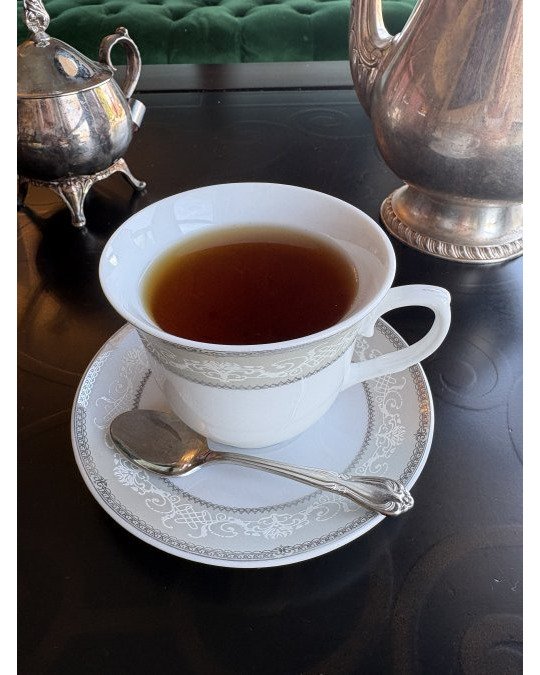
A traditional service leads with a black blend. English Breakfast is the standard house pour, built to take milk and to stand up to savory sandwiches.
Single-origin blacks appear frequently as a second option. Darjeeling is lighter and more floral, sometimes called the champagne of teas, and is best without milk. Assam is malty and full-bodied, closer to English Breakfast in character, and takes milk well.
Lighter and Caffeine-Free Options
Green tea is a reasonable third option for guests who want something lighter, though it needs different handling than black tea. Herbal infusions, often called tisanes, contain no caffeine and cover guests who are avoiding it. Common choices include peppermint, chamomile, and rooibos.
A practical service offers three teas: one black blend, one lighter option, and one caffeine-free. That covers nearly every guest without overwhelming the host.
Brewing: Temperature and Time
Brewing matters more than the leaf. The two variables that matter most are water temperature and steeping time, and they differ by tea type.
Black tea: water just off a rolling boil, roughly 200 to 212 degrees Fahrenheit, steeped three to five minutes.
Green tea: cooler water, roughly 160 to 180 degrees Fahrenheit, steeped one to three minutes.
Herbal infusions: water at a full boil, steeped five to seven minutes to draw out flavor.
Loose-leaf tea gives you more control than bags because you can adjust both the amount of leaf and the steep time. A common ratio is one teaspoon of loose leaf per cup, plus one for the pot.
Pairing Tea with the Tiers
Pairing is simpler than it sounds. Match the weight of the tea to the weight of the food. A brisk black blend cuts through the richness of clotted cream and smoked salmon. A lighter Darjeeling or green tea works better alongside delicate cucumber sandwiches and fruit-forward sweets. Earl Grey's bergamot lifts lemon curd and citrus tarts. If you are serving a single tea throughout, English Breakfast is the safest all-purpose choice.
Watch Out Oversteeping is the single most common way to ruin a good cup. Set a timer; black tea left past five minutes turns astringent and no amount of milk fixes it. Green tea is even less forgiving, going bitter within a minute of its ideal steep time.
Pro Tip Warm the pot with a splash of hot water before adding the leaves, then discard the water. It keeps the first cup hot through the first pour and is one of the small habits that reads as traditional service.
Dietary Adaptations and Allergen-Aware Menus
Dietary adaptations are now a standard part of planning any tea service, not an afterthought. Gluten-free bread for sandwiches, dairy-free spreads in place of clotted cream, and nut-free pastry selections cover most requests.
The practical move is to ask guests about allergies and restrictions when you set the date, not on the day. Cross-contamination is the real risk in a shared kitchen, so separate preparation surfaces and utensils matter.
How to Host Afternoon Tea at Home
Hosting afternoon tea at home is entirely doable if you plan the menu backward from your serving time. Work out how many guests you have, build the three tiers, and give yourself a realistic prep window.
Set the date and time. Mid-afternoon, around three or four o'clock, is traditional.
Count your guests and note restrictions. Allergies and dietary needs shape the whole menu.
Build the savory tier first. Choose three or four sandwich fillings and make them the morning of.
Bake or buy the scones. Fresh scones are worth the effort; day-old ones are not.
Select two or three sweets. Keep them small and varied.
Choose your teas. One black blend, one lighter option, one caffeine-free.
Set the table. A low table, a lace or linen cloth, and a three-tiered stand if you have one.
Brew just before serving. Tea should be fresh, and the pot should be refilled as it empties.
Key Takeaway The order of service matters more than the recipe list. Savories, then scones, then sweets, with tea poured throughout, is what makes it read as a traditional afternoon tea rather than a random assortment of snacks.
Conclusion: Experiencing Traditional Afternoon Tea
Getting a traditional afternoon tea right is about restraint and sequence, not volume. Small portions, the right order, and a properly brewed pot do more than an elaborate spread ever will.
If you would rather sit back and let someone else handle the tiers, that is exactly what we do. Sotherton Tea Room serves a Full Afternoon Tea and a Queen's Tea Experience in an elegant setting, with bespoke menus for private events and signature tea blends you can take home. Call 530-305-4152 to reserve your spots.
Frequently Asked Questions
What is included in a traditional afternoon tea?
A traditional afternoon tea is served on a three-tiered stand and includes three courses. The bottom tier holds savory finger sandwiches and small bites. The middle tier features scones with clotted cream and preserves such as strawberry jam or lemon curd. The top tier offers sweet treats like cakes, pastries, and petits fours. A pot of freshly brewed tea accompanies the meal, with varieties ranging from English breakfast to Earl Grey and green teas.
What is the difference between high tea and afternoon tea?
Afternoon tea is a light meal served mid-afternoon, typically between 3 and 5 p.m., at a low table with dainty sandwiches and pastries. High tea is a heartier evening meal traditionally served at a dinner table around 6 p.m., featuring meat dishes, bread, and tea. The names refer to the table height, not the elegance of the occasion. Many people confuse the two, but they are distinct traditions.
What are the basic etiquette rules for afternoon tea?
Hold your teacup by the handle with your index finger through it and your thumb on top, never loop your fingers through the handle. Stir gently without clinking the spoon against the cup, and never leave the spoon in the cup. Eat scones by breaking off small pieces rather than cutting them in half. Place your napkin on your lap and use it to dab your mouth. These afternoon tea etiquette rules keep the experience refined and comfortable for everyone.
Is afternoon tea considered a meal or a snack?
Afternoon tea sits between a snack and a full meal. It is a light meal, sometimes called a tea meal, designed to bridge the gap between lunch and a later dinner. The portions are small and dainty, with finger sandwiches, scones, and pastries rather than full courses. Many guests find it satisfying without being heavy, which is why it remains popular for celebrations and social gatherings.
What are the three main foods served at an afternoon tea?
The three main foods are finger sandwiches, scones with clotted cream and preserves, and sweet pastries or cakes. Finger sandwiches often include cucumber, smoked salmon, or egg salad fillings. Scones are served with clotted cream and jam, a combination sometimes called a cream tea when served alone. The sweet tier features petits fours, teacakes, and small pastries. Each tier is eaten from bottom to top.
How should you properly hold a teacup?
Hold the teacup by its handle, placing your index finger through the loop and your thumb on top for balance. Never cradle the cup in both hands or loop multiple fingers through the handle. If you are standing, you may hold the saucer in one hand and the cup in the other. When seated, leave the saucer on the table and lift only the cup. These small details are part of traditional afternoon tea etiquette.
Visit our website
Comments